
By Dion Addy-Adi | 23.04.2026 · 2:34 PM E.T. | $DSOULUS
2022
“We now de board flight 4-2-2 to Detroit. Abeg, have your tickets and Covid-19 test results ready for Gate 2-2-B.”
Idoreyin Uwem is in line to board the flight to Detroit, Motown. She is travelling from Creek Town, Cross Rivers. Cross Rivers is in West Africa, while Motown is in Africa America. Idoreyin holds her daughter with one hand and her airline tickets with the other. Her duffel bag is dangling from her shoulder. She adjusts her N-95 mask, planting it firmly over her nose and mouth. Her N-95 mask and duffel bag complement each other. They are both leopard prints.
Idoreyin’s mother, Eno Uwem, had clicked her tongue when Idoreyin told her she was flying to Detroit from Creek Town instead of Lagos Island. Her eyes widened when Idoreyin added that the airline she was flying with was Spiritia Airlines.
“I.D. Creek Town airplanes no be as reliable as the ones for Lagos o,” Eno had said. She was sitting on a wooden chair on the balcony of her medium-sized home, surrounded by many Bitter Leaf and Banana trees.
Idoreyin had rolled her eyes in response but kissed her mom on the cheek before walking back into the family’s home. Creek Town airplanes were affordable, less crowded, and Idoreyin was on a tight budget. Plus, Spiritia was having a buy-one-get-one-half-off sale. So, that was that.

“Eka! Momsy, I dey hungry o,” Idoreyin’s daughter, Ime Uwem, says. Her voice is barely audible from underneath her Doc McStuffins mask. Idoreyin holds her daughter’s hand, giving her a comforting squeeze. “God dey so we dey. Okay, Mommy’s Imeme? We go share some snacks when we enter de airplane, okay?”
Ime nods and squeezes Idoreyin’s hand.
They get to the front of the boarding line and show the gate agent their airplane tickets, their Cov-I-V vaccine papers, and their Cov-I-V test results. They are both Cov-I-V negative. The gate agent scans the airplane tickets. There is a beep, and the red light turns bright green. The gate agent then hands the tickets back to Idoreyin.
Idoreyin picks up Ime and they disappear through the airport terminal gate. A few seconds later, they reappear inside the jet bridge heading towards the parked airplane.

1788
In 1788, the memory of the 1767 Massacre haunted many residents of Creek Town (known then as Obio Oko). It was one of the bloodiest massacres in the Bight of Biafra region that year. English human traffickers had killed around 300 residents of Old Town (known then as Obutong). They had also stolen hundreds more Obutong residents and deported them to America (known then as Turtle Island). Immediately after the massacre, the Ibibios of Creek Town, a neighboring village, were so alarmed that they signed new protection agreements with the Nnabo Leopard Society during the summer of 1767. The Nnabo Leopard Society was a major multi-gender warrior society in that region.

Despite the protections from the Nnabo Society that lasted for 21 years, the English carried out more brutal massacres, thefts, deportations, and trafficking around the Bight of Biafra until 1788, when the first attack hit Creek Town.
2022

Janiyah Brown walks into the Detroit Public Library on Mandela-Martin-Luther Street. The sun is shining, the wind is swishing, and the birds are singing.
She greets the janitors as she enters the large wooden doors and the other librarians as she approaches the front desk. Then she takes off her bright yellow coat and settles down on her green chair. She browses through her emails and arranges her desk to prepare for the library’s opening. Today is going to be busier than usual because book talks and book clubs are happening throughout the day.
At noon, a librarian unlocks the front door. Then, a group of people standing in line outside the library walk in. There are two parents, three children, a few young adults, and an elderly resident. They have beautiful, cocoa-brown and licorice-black skin that glow under the golden yellow lights of the Detroit Public Library.
They wave to the librarians as they walk by the front desk and through the wide halls where a huge sign reads, “Borrow A Laptop!” to the left and “Try Libby! The reading app from our library” to the right. There’s also a flyer that shares information about Hoopla, another library app.
Janiyah smiles and waves at the residents before returning her attention to the unread emails on her computer. There are several. Today is the day she meets her new colleague from Creek Town. She doesn’t know anyone from Creek Town, so she spent the last few weeks browsing through many websites that shared some information about Creek Town. Janiyah scrolls through her DPLMail to see if there are any new emails with details about her new colleague. There are none.
A library patron in a sky blue N95 mask walks toward Janiyah and waves, “What up doe? I wanna renew ma library book,” they say. Janiyah smiles from behind her face shield and says, “Sure thing.” Then she takes “These Ghosts Are My Family” by Maisy Card, scans the book, and stamps the book with the new return date. The library patron then takes the book and walks towards the elevator across the room. They press a circular button to the left, and the elevator doors open.
“Librarian Janiyah! Wassup? What up doe?” Idoreyin greets with a grin. Janiyah turns to her left. There, in a flowery purple gown, stands Idoreyin. Janiyah smiles, “Mesiere, Idoreyin!”(1) Idoreyin’s eyes widen, “Mesiere o!” she responds.
Janiyah takes Idoreyin’s hand in hers, “Welcome to Motown.”

1788
Trigger warning for white violence.

“Eka! Eka! Wake up!” screamed Ukemae Uwem. The smell of smoke and sounds of gunshots filled the air. Ekaette Uwem rose with her eyes wide. “Mkpo abadie Ndito mi?” (2) she asked.
“The English don invade our village o!”
Ekaette rushed out of bed, clutching her knife. Then, she ran into Utibe Uwem’s room and grabbed her. “We must comot for here immediately!” she screamed. “The bloodthirsty English don invade and dem outnumber the Nnabo. Mbok, let’s go.”
Utibe was crying as she gathered her things to go. Just as they got to the door to leave, English human traffickers kicked the door down and entered the home. Ekaette motioned to her daughters to run away while she distracted the English. As they ran towards the open window, Ekaette screamed, threw some furniture to the ground, and rolled on the floor, stabbing one English officer on the foot. Her daughters ran out through the window. When they neared the gates of their home, they heard a loud gunshot and their mom’s scream, then silence.
Ukemae started crying more loudly and ran back to save her mom. Utibe begged her not to go. Ukemae continued to run back towards their front door. When she entered through the door, she saw her mom lying face down on the ground, covered in blood. The English captured and deported Ukemae to America. Utibe escaped to a neighboring town as a refugee. She returned to Creek Town two years later.

2022
After the library closes for the day, Idoreyin and Janiyah pack their bags and head to the bus stop. By the time Idoreyin and Janiyah make it to the bus stop located at the crossroads of Mandela-Martin-Luther Street and Aretha Avenue, they are sweating. It is a hot summer evening in Detroit.
Although natural evenings are supposed to be cooler, because of white-orchestrated climate catastrophe, Detroit now experiences hotter evenings. Janiyah glances at her wrist and checks the time.
The bus will be here in 30 minutes.
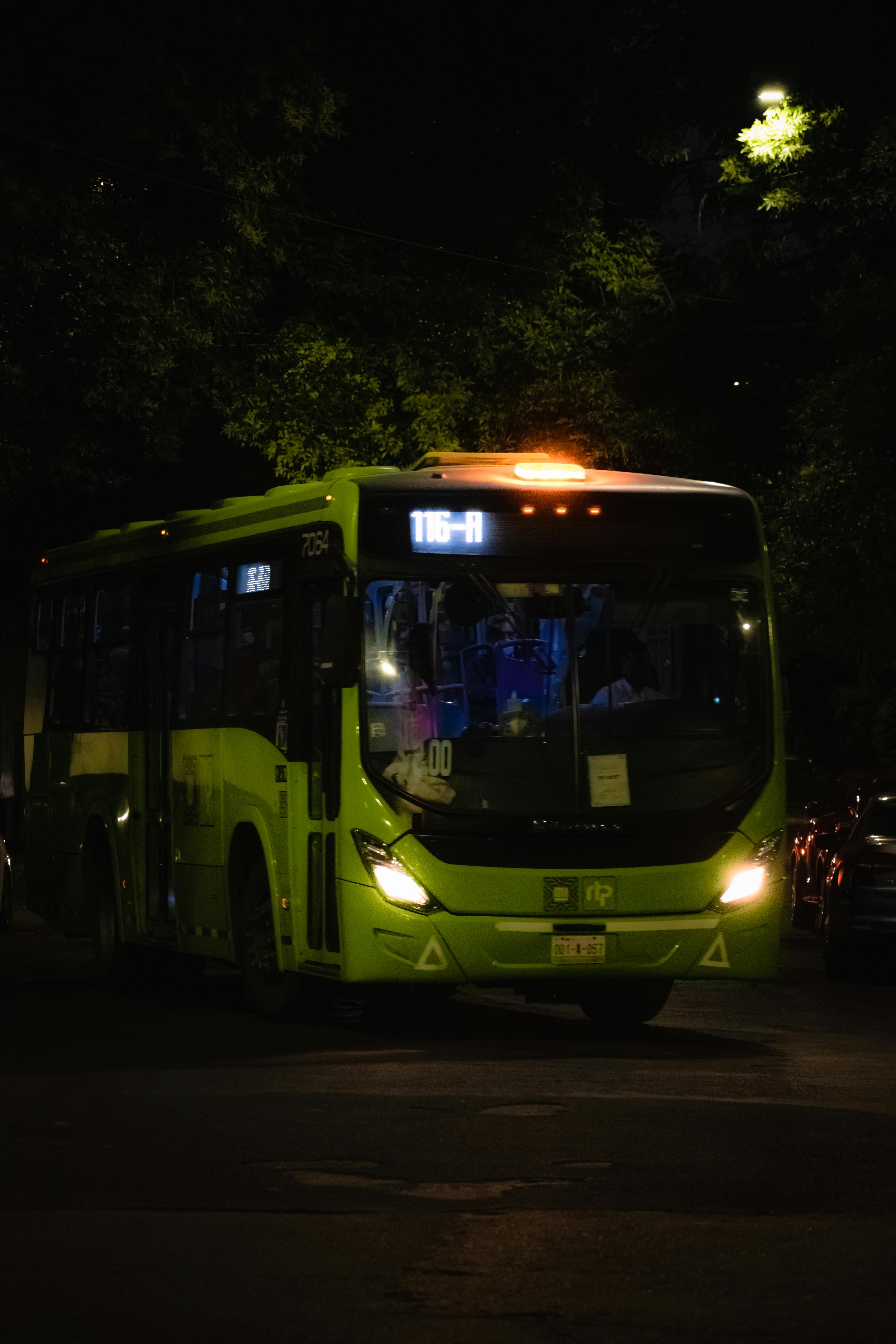
Janiyah then shifts her gaze to the bus stop. The bus stop is square and has a purple horizontal line under the words “22 Mandela-Martin-Luther.” Electric cars, solar bicycles, and skaters are zooming by.
Janiyah’s outer jacket is dancing left and right as the wind moves through her. Her 4C curls are also shifting to the right, to the left, and above her left ear. That is when Idoreyin notices the birthmark under Janiyah’s ear. Her eyes widen, and she feels a tingling in her left ear.
As she reaches out to grab Janiyah to let her know what she notices, the giant green DDOT bus pulls up and stops with a loud tsssss.
Janiyah and Idoreyin hop on the bus and tap their Detroit I.D. cards on the card reader. After a beep, a bright purple light flashes, and the bus driver nods to them.
They enter the bus.
While on the bus, Idoreyin shows Janiyah the birthmark under her left ear. Her birthmark is like Janiyah’s. Janiyah gasps in shock.
“Arriving at Rosa Parks Boulevard and Oakland Avenue Crossroads. Next stop, Rosa Parks Boulevard and Malcolm X Crossroads.”
Janiyah, who is sitting by the window, pulls the “Stop” cord. A loud beep follows. When the bus arrives at the green bus stop, the bus stops, and the back doors open. Janiyah gets up and waves to Idoreyin, “I’ll see ya tomorrow!”
Idoreyin laughs, “This na my stop too.”
Patti LaBelle “Lady Marmalade”

Janiyah invites Idoreyin and her daughter over for dinner that weekend.
It has been an interesting few weeks of librarians mistaking Janiyah and Idoreyin for each other, library community members asking if they are sisters, and fellow bus riders asking if they are twins.
Idoreyin, of course, says yes to dinner.

That weekend, when evening rolls in, Idoreyin dresses in her best gown, wears her jet-black heels, and sprays herself with the Kush body oil she bought from a Detroit freelancer on the DDOT bus.
She quietly whispers a prayer of gratitude to the Entrepreneurial Spirit of Black Detroit as she inhales the sweet aroma of the Kush body oil. You couldn’t buy body oil like this from most high-end retail stores.
When Ime and Idoreyin arrive at Janiyah’s home, their daughters—Ime and Tamiya—recognize each other from school. They are in the same Black literature class. They smile and say, “Wow.”
Janiyah then introduces her wife—Kaliyah Brown. Kaliyah is a local activist and an endocrinologist. She organizes with Trans Sistas For Pan-African Unity, fundraises for transitional housing for survivors of domestic violence, and helps trans youth access life-saving hormones at The Ruth Ellis Medical Center.
Idoreyin shares that she has two moms because her dad married two wives before he died. After the funeral, instead of her moms marrying new (and different) husbands, they kept living together and supporting each other.
“The similarities between you two are def too wild,” Kaliyah finally says, when everyone is sitting at the dinner table and eating. Ime and Tamiya nod. “You two even look alike,” Tamiya adds.
Idoreyin smiles, “Well, maybe Janiyah na my long-lost sister,” she jokes. Everyone laughs. “Maybe,” Janiyah agrees.
“You know what’s gonna be wilder?” Kaliyah asks, her eyes lighting up.
“What?” Janiyah asks, smiling at her wife’s expression.
“If you two have the same b-day.”
There is silence.
“Aight, let’s see,” Janiyah finally says.
Idoreyin and Janiyah take out their Detroit I.D. Cards and drop them on the table, side by side. On both cards, the birth dates read:
“DOB 08-08-1987.”

Idoreyin and Janiyah decide to see a Hoodoo diviner and an Ekpo Idiong diviner to learn about their ancestry. The Hoodoo diviners are more well-versed with African American spirituality, while the Ekpo Idiong diviners are more well-versed with African Ibibio spirituality. Idoreyin plans to call the Ekpo Idiong diviner on WhatsAppDoe, an international Black-owned calling app. She plans to make the call after they arrive at the Hoodoo diviner’s house. Janiyah knows of the Hoodoo diviner from her friends and family. The Hoodoo diviner also has a conjure shop in the Grand River Business District area of Detroit. Janiyah goes there for all her oil, soap, tea, tincture, candle, and spiritual bath needs. The Motown Conjure Shop, just like many small, Black-woman-owned businesses across the city, has helped sustain the local economy in better ways than most national corporations.
The Hoodoo diviner’s house is a small townhome that is surrounded by tall Black Cherry trees. She has a cinnamon broom by her front door. When Janiyah and Idoreyin enter her home, she tells them to take off their shoes, anoint their heads, and anoint their feet.
When they are done, she walks with them into the sunroom and asks them to take a sit on the blue couch by the window. There is a wide picture of the ocean behind the blue couch.
After they are seated, she introduces herself. “Welcome to my home. My name is Mama Sea-ya, and it’s wonderful to meet y’all.” Janiyah and Idoreyin also introduce themselves and explain their situation to Mama Sea-ya. She nods as she listens.
Idoreyin then calls the Ekpo Idiong diviner on WhatsAppDoe. She picks up after a few rings and introduces herself. “My name is Mama Ase Udu, and it’s good to be connected with you.” They spend a few more minutes getting to know each other and learning about the situation.
Both diviners then light candles, pour libations, and beat drums to welcome the Ancestral Black spirits into the room. Following that, they get to work. They both place a bowl of water on the ground and look into the water to see the messages. Mama Ase Udu and Mama Sea-ya both eat some spiritual herbs to help them see and hear better.
After 30-40 minutes of seeing, hearing, and recording the water, Mama Sea-ya and Mama Ase Udu are ready to share with Idoreyin and Janiyah the details of what they see and hear.
Denise Jannah “That Old Black Magic”

Mama Sea-ya begins, “I was shown and told by y’alls Ancestral Black spirits that you two are related. They say English human traffickers separated your family in 1788 when they attacked your folks in Creek Town, Cross Rivers. They say your Black African Ancestors are sisters.”
She continues, “Your Black African Ancestors were children when the traffickers separated them. While Janiyah’s Ancestor, Ancestor Ukemae, was being trafficked to America, her mother, Ancestor Ekaette, who the English killed during the Creek Town Massacre, was with her. She was deeply saddened and angered to see the condition her daughter was in. Today, the memory of that day still brings her sadness and rage.”
Mama Ase Udu nods in agreement. “I saw similar visions in the water. English human traffickers separated your Black African Ancestors during their attack on your village. Idoreyin’s Ancestor, Ancestor Utibe, tried to kill herself multiple times because she was heartbroken about losing her mother and her sister. Her mother, Ancestor Ekaette, was watching over her, too. Ancestor Utibe ended up living with her extended family when they adopted her later in her life. Today, the memories still haunt Ancestor Utibe. She too is angry.”
Idoreyin and Janiyah are now holding each other and sobbing. Both diviners are teary-eyed.
Although it had taken 234 years, Idoreyin and Janiyah are grateful to their Ancestors and the diviners that they are finally reunited, have more clarity, and can begin their journey to restore and repair to their family tree.

Endnotes
1 “Mesiere” means “Good Morning” in Ibibio
2 “Mkpo Abadie, Ndito mi?” means “What’s going on, my children?” in Ibibio
Conclusion Notes
If you enjoyed reading U.N.I.T.Y. After 234 Years, please do these three things:
1. Watch “Slavery Separated Them. Generations Later, They’re Reuniting. | PBS Short Docs”
2. Visit the Freedman Bureau’s Search Portal for genealogy records on our African American Ancestors
3. Support Didiong Soulutions ($DSOULUS) by either booking a service, visiting our Booktique, or visiting our Bibliyotèk. When you support us, you support the safety and stability of displaced Black people.
Thank you for your support.
 Didiong Soulutions